

Sales-side lawyering
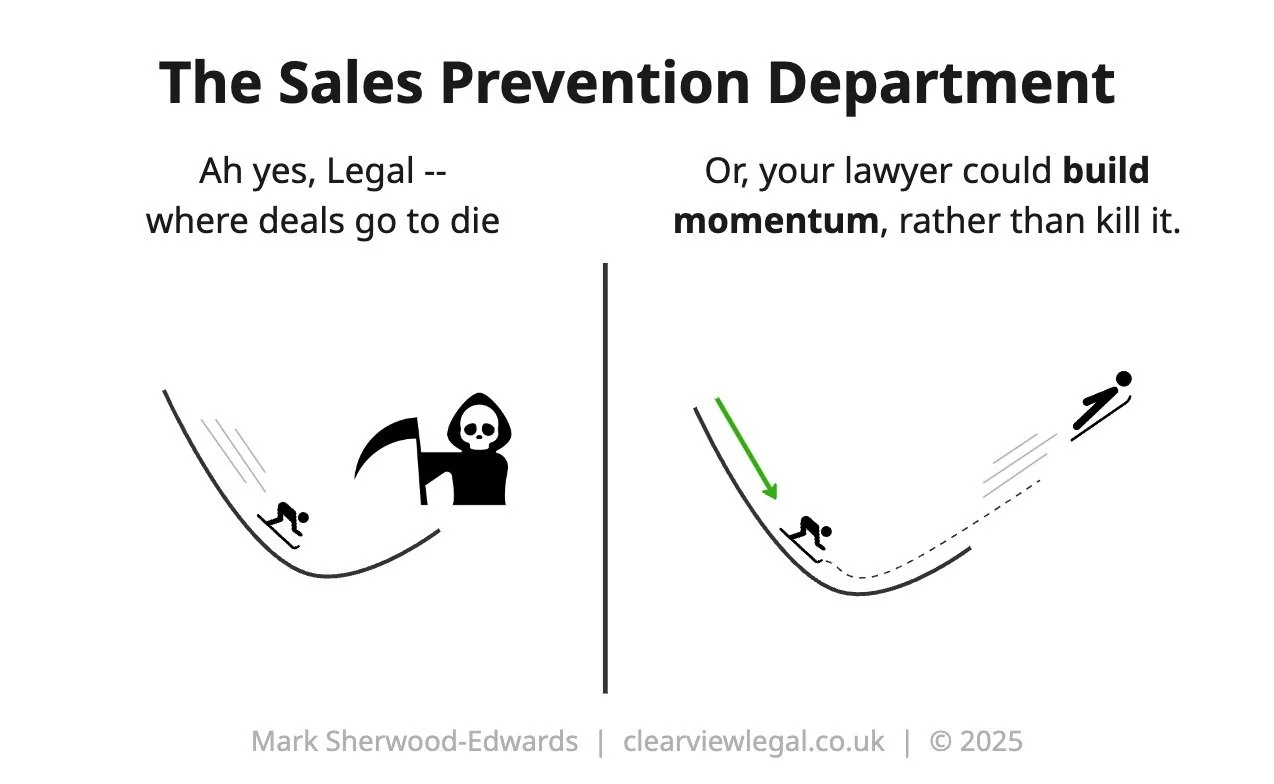
If you are running a B2B business that gets most of its revenue from sales contracts, and those contracts are negotiated, and you want your revenues to increase (who doesn’t?) then what you need is a sales-side lawyer.
Sale-side lawyers are different to other lawyers. Most lawyers fit in the adviser category: their approach is to sit on the touchlines and advise.
Sales-side lawyers are activists – they get involved and make things happen. Sales-side lawyers are front-line players and have an inbuilt motivation to close (profitable) contracts.

This quadrant explains the difference. Sales-side lawyers are lawyers that are in the top-right quarter. On the Theoretical to Commercial axis (aka willingness to form a view on risk), they are on the Commercial end. And on an Advisory to Activist axis (aka desire to make the transaction happen), they are at the Activist end.
Sales-side lawyers are willing to make a judgment call on which points to stick and on which points to concede. This sounds like a small point, but it isn’t: lawyers are trained to be risk averse, and the easiest way to minimise risk is to never make a judgment call. (For more on this, click here).
Sales-side lawyers like people that work in Sales, and get on with them. They are also good negotiators, able to forge good relationships with the other side, and reach the right compromises quickly. They minimise friction but also know when to use friction as a negotiating tool (click here for more on this).

Most sales-side lawyers are ex-in-house lawyers, or have spent a lot of time working in-house. That’s important, because in-house lawyers look at the world differently to law firm lawyers. Not only do they understand how Pricing, Service and Sales need to come together to produce successful contracts, a major part of their job is corralling Pricing, Service and Sales so that all the pieces come together at the right time.
And – and this is fundamental – sales-side lawyers understand that the contracting process is not a series of ad hoc events, it’s a process. They put in place contracts and processes which reduce contract cycle time, with the result that sales revenue increases.